This Bread, This Cup, This Moment
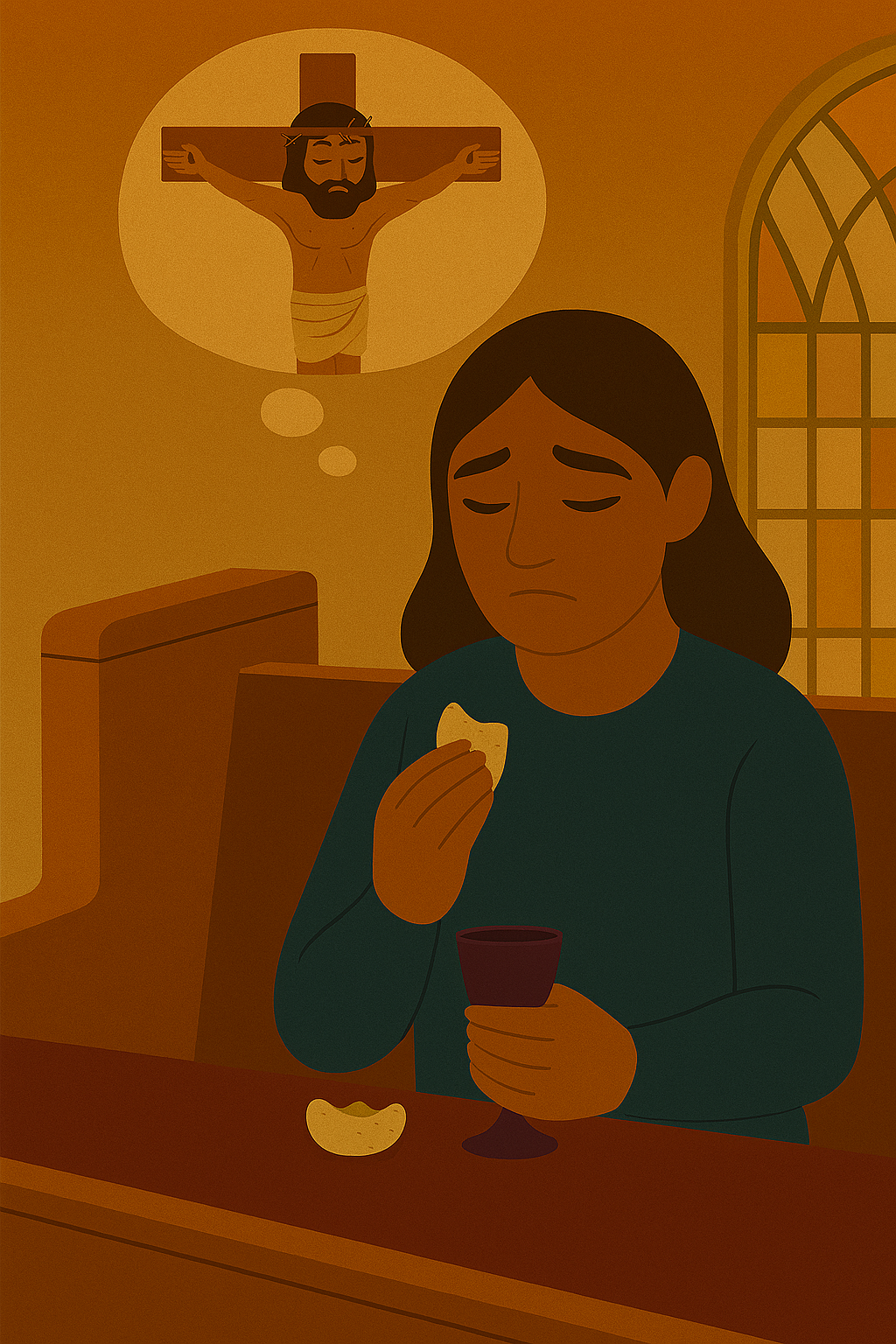
Many of us are familiar with the Lord’s Supper. We’ve heard the words, passed the bread, and sipped the cup. But sometimes, familiarity can lead to forgetfulness. We go through the motions, but miss the meaning. And Paul’s words in 1 Corinthians 11:23–28 are a gentle but firm reminder: this is a sacred moment of remembrance and reflection.
Beginning with verse 23, Paul mentions the Lord’s betrayal. How often do we stop to think about how this made Jesus feel? Not just the betrayal alone, but knowing that it was going to happen. And even though He foresaw the betrayal, that doesn’t mean He was prepared for the human emotions that were to follow! Have you ever been betrayed by a best friend or loved one? How did it make you feel? How soon–if ever–did you forgive that person?
Then in verse 24, Jesus gives thanks for the bread He had broken and tells His disciples “Take, eat: this is my body, which is broken for you: this do in remembrance of Me.” He gave thanks. Even knowing what was coming. That alone should stop us in our tracks. And then He broke the bread, His body, for us. So when we hold that bread, we’re not just remembering, we’re surrendering. It’s saying, “Lord, I see what You did. Help me live like I remember.” To add, do we stop to think about how Judas was there too? Yes, Jesus’s body was broken for him also. He died for us all. Many of us tend to look down on Judas because he betrayed Jesus, but aren’t we doing the same whenever we sin? Especially if we’re sinning willfully!
Continuing into verse 25, He held the cup and called it a covenant. Not a contract. Not a transaction. A covenant—sealed with blood, offered with love. And He said, “Remember me.” Not just what I did. Remember who I am. Remember why I came. Remember what this means for you, today.
When we get to verse 26, we’re reminded that every time we hold the bread and cup, we’re telling a story. Not just ours—but His. It’s saying, “This is what love looks like. This is what grace costs. This is what hope feels like.” And we should keep saying it until He comes.
Then in verse 27, Paul reminds us that if we partake of the communion in an unworthy manner, then we’re guilty of the body and the blood of the Lord. Unworthy doesn’t mean unqualified. We all need grace. But we must approach communion with a heart that’s honest, surrendered, and aware of its meaning. This verse invites us to pause. Before we eat the bread or drink the cup, we should ask: Is my heart aligned with the One I’m remembering? This bread and this cup—they cost something. And we don’t want to treat that lightly.
Lastly, in verse 28, Paul lets it be known that we should examine ourselves when partaking of communion. Self-examination is not a punishment. It’s a chance to realign, to repent, and to remember the grace that covers us. This verse protects the sacredness of communion. It reminds us that this isn’t just a symbol—it’s a spiritual act that deserves our full attention and humility.
Overall, Communion is a declaration. It’s not just personal—it’s public. Every time we partake, we’re saying: “I believe in the cross. I remember what Jesus did. I’m living because of that sacrifice.” Paul warns us not to take this lightly. He speaks of examining ourselves—not to shame us, but to invite us into honesty. Are we holding onto bitterness? Are we ignoring conviction? Are we treating this moment as routine instead of reverent?
So before we partake, let’s pause. Let’s reflect. Let’s remember that this bread represents a broken body—and this cup, poured-out love. Let’s make space for repentance, for gratitude, and for awe. Don’t just go through the motion during this time in worship service, because Jesus wasn’t just going through the motion when He gave His life for us.

Host
Hi, I'm Kayla Ware, your host of Talk With Me, Walk With Him. I am 28 years old, and I reside in Douglasville, GA with my husband, Elijah, son, Jomok’e, and our baby girl Zoey. We are members of Villa Rica Church of Christ. I am a stay-at-home wife, blessed with the opportunity to take care of our baby while spreading the Gospel full-time. What better way to live life than doing what glorifies God and bringing others to Christ?

Will Your Entertainment Affect Your Eternity?
